
2026 Silver Winner
Conceptual
CANEST: Bio-based Nomadic Furniture System
Entrant: Tsinghua University
2026
Silver
A closer look
Project gallery.
Select a thumbnail to browse. Click the main image to enlarge.
CategoryConceptual
Class / SubcategoryFurniture
Social Design
Social Design
Country / Region China
ChinaClient’s nameBeijing Qilinglu Culture Media Co., Ltd.
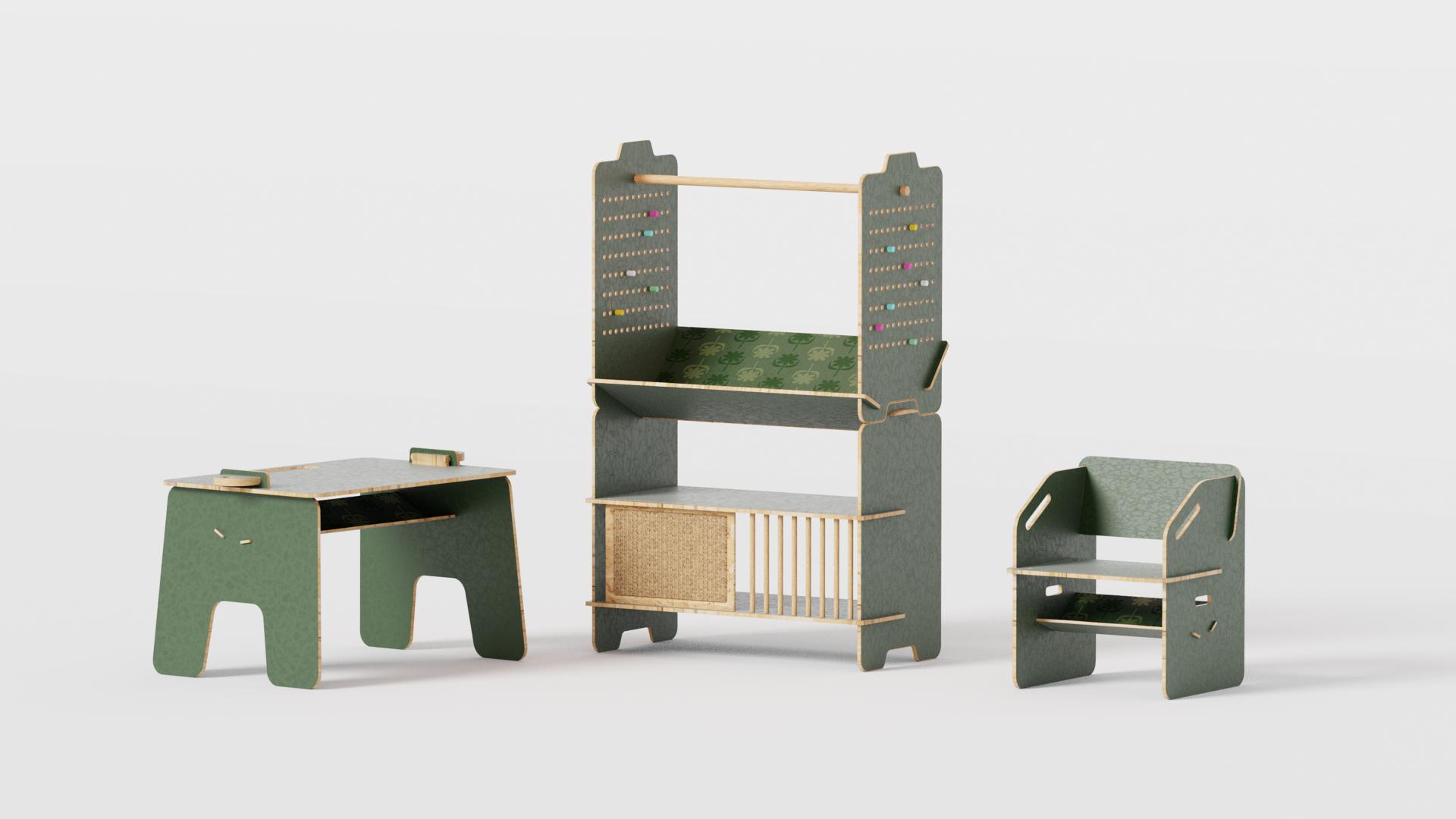
CANEST: A Nomadic Furniture System for a New Generation of Renters
Urban living is defined by mobility. Young renters move frequently, yet the furniture market offers a flawed choice: expensive, heavy pieces that are difficult to transport, or cheap, "fast furniture" that relies on synthetic adhesives, emits unpleasant odors, and is discarded after a single move. CANEST proposes a healthier, more adaptable alternative—a nomadic furniture system designed to evolve with its users and their pets across changing homes.
Designed for compact living, the CANEST system integrates a desk, a chair, and modular storage units that seamlessly accommodate human-pet co-living. At the heart of its innovation is a radical material strategy. The panels are crafted from agricultural by-products, specifically sugarcane bagasse and corn cobs, transforming food waste into highly durable furniture components.
To eliminate the indoor air quality issues caused by conventional chemical glues, CANEST utilizes natural lacquer. This traditional material acts as a highly effective bio-based binder and a protective, water-resistant finish, enhancing the tactile and sensory quality of the pieces.
Functionally, CANEST features a brilliant, hardware-free interlocking structure. It requires no tools to assemble, allowing for effortless flat-pack transportation and quick setup. Because every component can be easily repaired, replaced, or reconfigured, CANEST dramatically reduces moving burdens and long-term furniture waste.
By combining upcycled biomaterials, ancient natural binders, and a demountable, user-centric structure, CANEST is not just a piece of furniture—it is a sustainable lifestyle statement for the modern nomad.
Project credits.
Peizhang Yang
Team Lead
Yefan Liu
Team Lead
YiMing Wang
Qiying Gao
Ziqi Wei
Jiahao Li
ChenYu Xiao
Bowen Yao
Peng Qin
Yujie Li
Junjie Wan
Keep exploring
More winning perspectives.
2026 Silver Winner
HELD
Archcyte2026 Silver Winner
WarmGrid: Graphene Composite Multifunctional Thermal Curtain
FRANCE LOVSOUL GROUP LIMITEDYour work belongs in the conversation.
Begin Your Entry