
2026 Silver Winner
Hobby & Leisure
LIGE Wuxing Saxophone
Entrant: LIGE Zhongyi Musical Instruments & Audio (Beijing) Co., Ltd.
2026
Silver
A closer look
Project gallery.
Select a thumbnail to browse. Click the main image to enlarge.
CategoryHobby & Leisure
Class / SubcategoryMusical Instrument
Woodwind
Woodwind
Country / Region China
ChinaClient’s nameGe Li
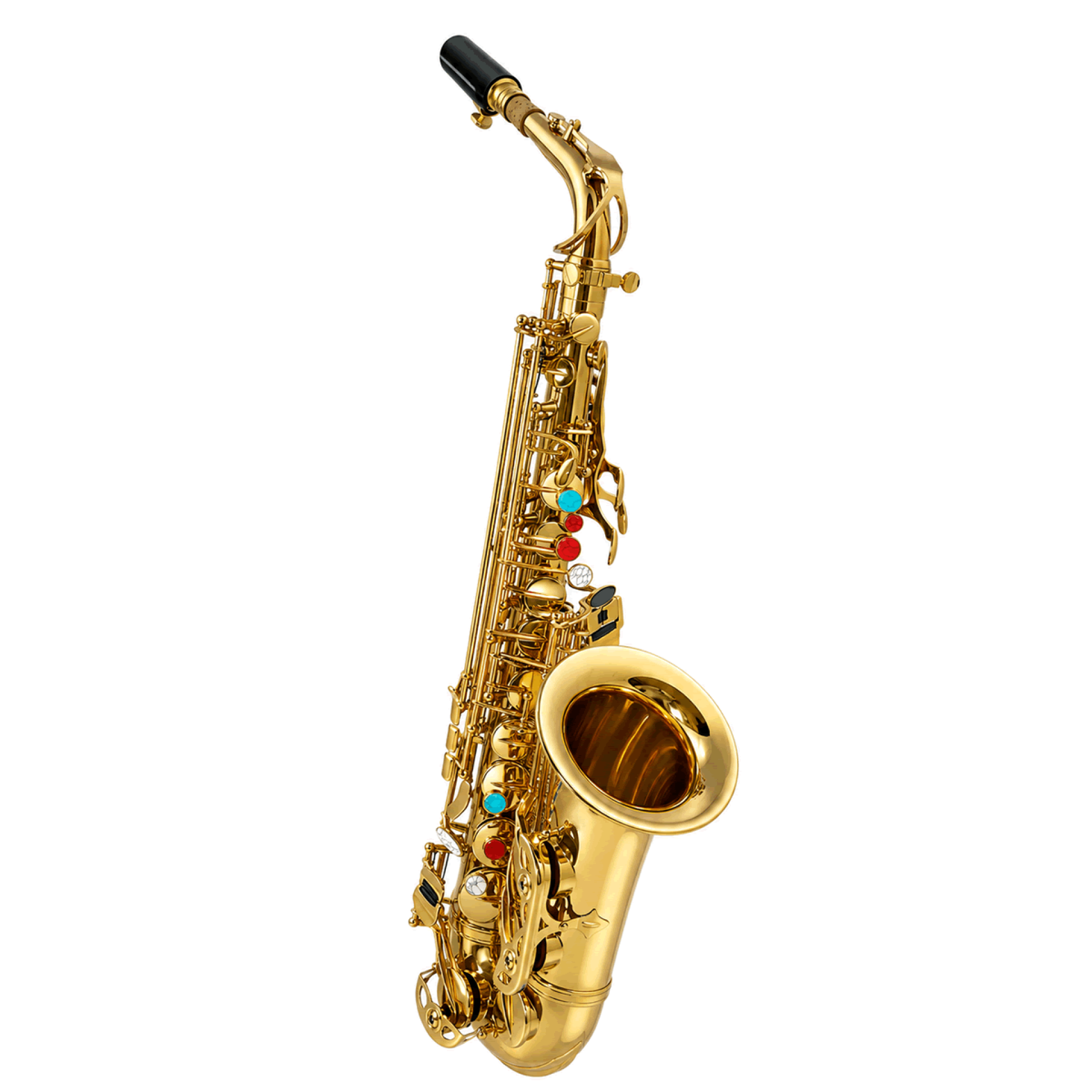
The project addresses the high learning barrier of traditional saxophone fingering for amateur learners and complete beginners. Since 1999, LIGE’s founder has been continuously involved in public-benefit saxophone education, providing free instruments, structured lessons, and accessories to beginner learners. More than two decades of frontline teaching revealed a recurring problem: conventional saxophone key layouts are dense, abstract, and difficult to identify visually, making fingering combinations and scale relationships challenging for beginners to understand and memorize.
The main objective was to create a more intuitive and accessible saxophone learning system while preserving the essential structure, playability, and craftsmanship of a modern saxophone.
The central design decision was to integrate the traditional Chinese Wuxing philosophy and its orthodox five-color system into the saxophone key layout. In traditional Wuxing culture, Wood, Fire, Earth, Metal, and Water correspond respectively to cyan, red, yellow, white, and black. These five colors were systematically applied to key positions to establish a visual learning system in which fingers correspond to colors and colors correspond to scales.
This approach was selected because visual color recognition allows beginners to understand and memorize fingering patterns more quickly than relying only on abstract key positions. Compared with conventional monochromatic saxophone key layouts, the design transforms complex fingering relationships into a clear, recognizable, and memorable visual system.
During development, more than 20 years of public-benefit teaching experience informed the identification of beginner learning difficulties and the refinement of the color-coded key logic. Modern saxophone manufacturing processes and instrument structures were retained to ensure stable performance while introducing the new educational interface.
Practical teaching experience indicates that this visual system can help beginners identify finger positions and scales more efficiently, improve learning confidence, and reduce the difficulty of initial saxophone training.
The project is currently completed. It combines Chinese philosophical culture, traditional five-color aesthetics, long-term educational practice, and modern instrument design to provide an innovative solution for accessible saxophone education worldwide.
Explore the project.
Project credits.
Ge Li
Founder & Chief Designer, LIGE Musical Instruments
Mingyang Li
Product Designer, LIGE Musical Instruments
Ziyang Li
Product Designer, LIGE Musical Instruments
Keep exploring
More winning perspectives.
2026 Silver Winner
BesCathin® Egg Yolk Phospholipid Protein Hydrolysate
CIIMBIO (SUZHOU) Co., Ltd.2026 Silver Winner
Quriosity
Quriosity.AIYour work belongs in the conversation.
Begin Your Entry