
2026 Gold Winner
Fashion & Lifestyle
Moon Gate
Entrant: Zhang Zhanlin
2026
Gold
A closer look
Project gallery.
Select a thumbnail to browse. Click the main image to enlarge.
CategoryFashion & Lifestyle
Class / SubcategoryJewelry
Necklaces & Pendants
Necklaces & Pendants
Country / Region China
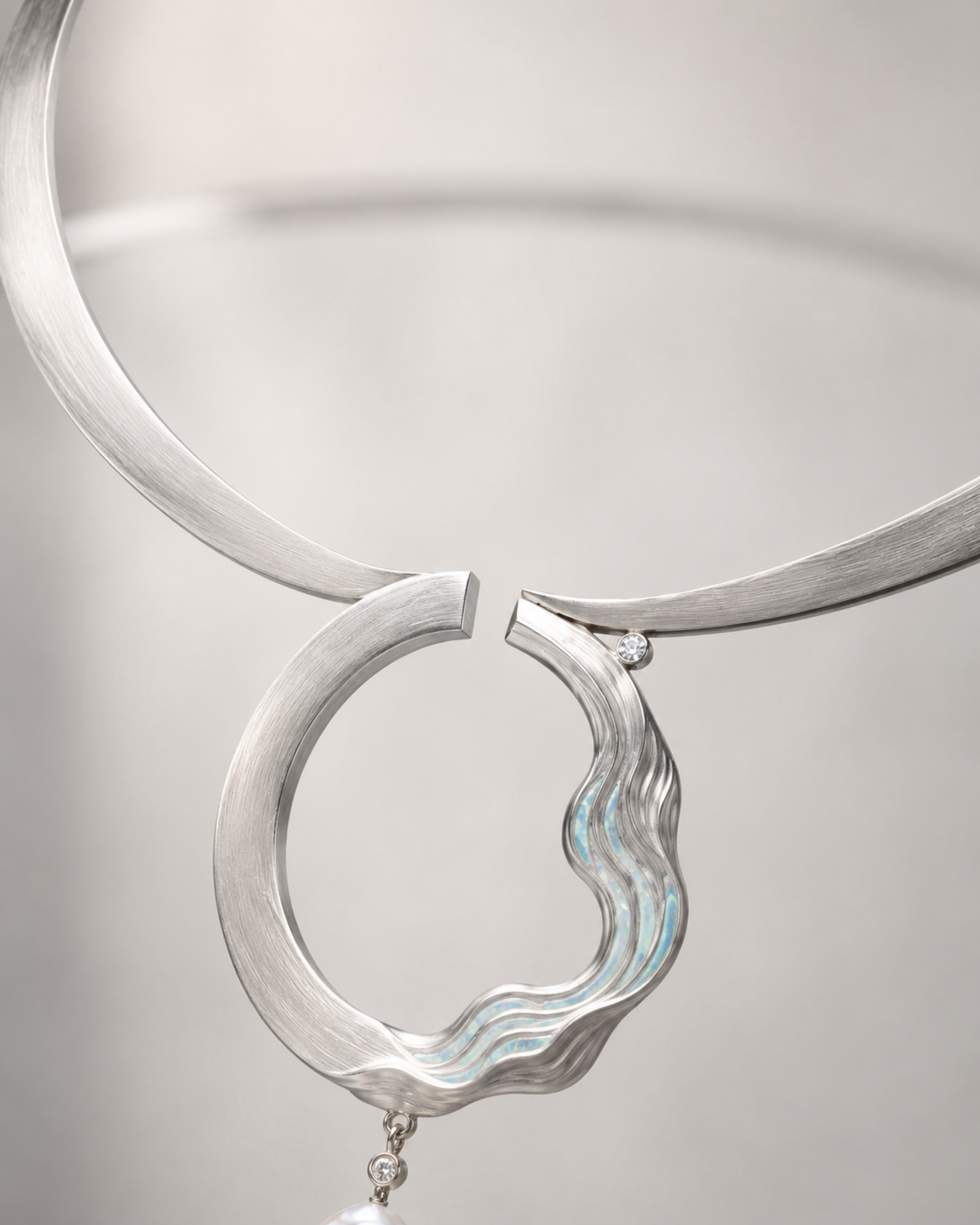
ChinaMoon Gate is a contemporary art necklace inspired by the moon gate in traditional Chinese gardens. In Eastern architecture, a moon gate is not merely an entrance; it is a way of framing the world. It creates a poetic relationship between inside and outside, presence and absence, body and space, moonlight and courtyard.
The designer transforms this architectural language into a wearable miniature space. With a circular or semi-circular structure as the visual core, the necklace uses metal arcs, open voids, pearl or jade-inspired elements to express the idea of seeing a landscape through the moon. Through minimal form and refined craftsmanship, Moon Gate reinterprets the Chinese garden principles of borrowed scenery, framed view, and negative space within a contemporary Western jewelry context.
The core of Moon Gate is not the shape of the moon itself, but the act of seeing the world through a circular space. In Chinese gardens, moon gates frame trees, stones, water, and courtyards into living compositions. The designer miniaturizes this spatial experience into the scale of the body, allowing the necklace to become a small Eastern courtyard worn on the chest.
The innovation of Moon Gate lies in translating architectural space into jewelry structure. Instead of applying traditional patterns onto the surface, the design turns gate, moon, view, and emptiness into the primary composition of the necklace. The circular void becomes both the visual center and the most important material of the piece. Through the relationship between solid and empty space, the wearer’s skin, clothing, and light become part of the design.
The innovation of Moon Gate lies in translating architectural space into jewelry structure. Instead of applying traditional patterns onto the surface, the design turns gate, moon, view, and emptiness into the primary composition of the necklace. The circular void becomes both the visual center and the most important material of the piece. Through the relationship between solid and empty space, the wearer’s skin, clothing, and light become part of the design.
Keep exploring
More winning perspectives.
2026 Gold Winner
Golden Ripples Rise with Tides
Renaissance Hangzhou Qianjiang Century City Hotel2026 Gold Winner
LUNA
ELICA spaYour work belongs in the conversation.
Begin Your Entry